

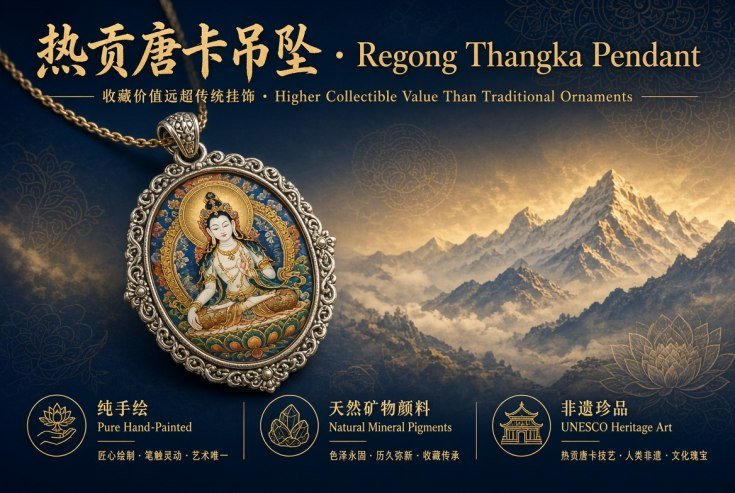
In today’s rising wave of cultural collectibles and spiritual consumption, Regong Thangka pendants have become a major focus for collectors and enthusiasts. Compared with ordinary traditional pendants, authentic Regong Thangka pendants not only offer superior artistic and cultural value but also demonstrate clear potential for value retention and appreciation in the collectibles market. This article provides an in-depth analysis of why the collectible value of Regong Thangka pendants is higher, along with practical authentication and purchasing guidance to help you avoid counterfeits and invest wisely in genuine intangible cultural heritage pieces.
What Is a Regong Thangka Pendant? The Essence of Qinghai Huangnan’s Intangible Cultural Heritage Art
Regong Thangka originates from Tongren City (the Regong region) in Huangnan Tibetan Autonomous Prefecture, Qinghai Province, and is the core representative of “Regong Art.” In 2006, Regong Art was listed as a National Intangible Cultural Heritage of China; in 2009, it was officially inscribed on the UNESCO Representative List of the Intangible Cultural Heritage of Humanity, earning the title “Dunhuang of the Snowy Plateau.”
A Regong Thangka pendant condenses the traditional large-scale Thangka into a compact form (commonly 4×5 cm). Through pure hand-painting and refined mounting, it becomes a wearable amulet and collectible. It fully preserves Tibetan Buddhist iconometric standards, mineral pigment colors, and gold-line decoration—serving both as a “portable shrine” and as a modern cultural collectible that combines art, faith, and investment attributes.
Unlike mass-produced traditional ornaments, every authentic Regong Thangka pendant embodies weeks or even months of a painter’s meticulous work, giving it greater scarcity and cultural depth.
Regong Thangka Pendant vs. Traditional Ornaments: Key Differences in Collectible Value
Ordinary traditional pendants (metal, jade, resin, etc.) primarily serve decorative purposes. Their craftsmanship is relatively simple, products are highly homogeneous, and long-term appreciation potential is limited. In contrast, genuine Regong Thangka pendants excel in the following four dimensions:
1. Intangible Cultural Heritage Craftsmanship and Extreme Detail: The Core Strength of Regong Thangka
Regong Thangka strictly follows the Iconometric Scriptures (measurement canons) and traditional painting procedures, including canvas preparation, sketching, mineral coloring, gradation, outlining, gold-line application, and eye-opening—often involving dozens of steps. Miniature Regong Thangka pendants must fully present the deity’s expression, halo, lotus seat, and decorative patterns within an extremely small space, demanding even higher skill from the artist.
Gold-line outlining is a signature technique of Regong Thangka. Authentic pieces use ground gold powder or gold leaf, resulting in smooth, enduring luster. This “art of time” represents a level of craftsmanship that ordinary traditional ornaments cannot match.
2. Pure Hand-Painting + Natural Mineral Pigments: Unique and Fade-Resistant for Centuries
A truly valuable Regong Thangka pendant must meet these standards:
- Pure hand-painting: Created by local artists from the Regong region of Qinghai, featuring natural brushstrokes and individual style, never the perfect edges of machine printing.
- Natural mineral pigments: Cinnabar (red), lapis lazuli (blue), malachite (green), gold powder, and other materials sourced from highland minerals. These produce rich, vibrant colors that can remain vivid for a hundred years without fading.
- High-quality base materials: Specially prepared cotton cloth, silk, or coarse mineral-sand fabric that feels substantial and supports long-term preservation.
Cheap imitations typically use chemical pigments or printing techniques that fade and lose authenticity easily. The high cost of materials and labor determines the scarcity and value foundation of genuine Regong Thangka pendants.
3. Cultural and Religious Depth: Spiritual Value Beyond Decoration
A Regong Thangka pendant is more than an accessory—it is a tangible expression of Tibetan Buddhist faith. Subjects include White Tara, Yellow Jambhala, Black Jambhala, protective deities, and others, strictly adhering to iconometric rules and often consecrated or blessed. Wearing one is equivalent to carrying a “portable shrine,” serving purposes of visualization, prayer, and protection.
Ordinary traditional ornaments usually have shallower cultural meaning, whereas Regong Thangka pendants simultaneously fulfill aesthetic, spiritual, and collectible needs, creating significant spiritual premium.
4. Scarcity and Market Performance: Stronger Long-Term Appreciation Potential
Authentic hand-painted Regong Thangka pendants are limited in production, especially those by senior artists or intangible cultural heritage inheritors. As global interest in Tibetan Buddhist art and intangible cultural heritage continues to grow, fine Regong Thangka pieces have shown stable performance in auctions and private collections, with some high-end miniature works already demonstrating clear appreciation.
Pieces with clear Qinghai Huangnan Regong origin tracing, artist information, intangible cultural heritage certification, or monastery collaboration possess stronger generational and investment attributes. In comparison, mass-produced traditional ornaments have high circulation and tend to depreciate easily.
How to Choose an Authentic Regong Thangka Pendant: Practical Guide to Avoiding Counterfeits
To acquire a Regong Thangka pendant with genuine collectible value, focus on these three points:
- Craftsmanship and Material Authentication: Look for natural hand-painted brushstrokes and slight irregular edges; colors should appear warm and natural; the base material should have substance rather than a plastic feel. Extremely low prices (just a few dozen yuan) usually indicate printed or chemical-pigment fakes.
- Origin and Traceability: Prioritize items clearly marked as originating from “Qinghai Huangnan Regong” or Tongren, accompanied by artist information or numbered certificates. Reputable sellers provide description cards or related intangible cultural heritage documentation.
- Price Reference Range: Basic authentic pure hand-painted pieces typically range from 300–1,500 yuan; works by renowned artists, those with gold leaf, or special consecration can be higher. The best value lies in pure hand-painted mineral-pigment pieces.
Daily care tips: Avoid prolonged contact with water and intense friction; store in a dry environment. Properly maintained natural mineral-pigment works can retain their color for decades or longer.
Conclusion: Choosing a Regong Thangka Pendant Means Choosing Wearable Intangible Cultural Heritage and Faith
The reason Regong Thangka pendants possess far higher collectible value than traditional ornaments lies in their perfect condensation of world-class intangible cultural heritage techniques, natural mineral pigments, strict religious iconometry, and spiritual faith into a compact form. They are not mere decorative items but modern cultural collectibles that combine art, culture, and investment potential.
Whether you are a cultural collectibles enthusiast, a Tibetan Buddhist follower, or someone seeking unique aesthetics and deeper meaning, an authentic Regong Thangka pendant is worth careful selection. Remember: true value comes from the pure hand-painted craftsmanship, the timeless quality of mineral pigments, and the warmth of faith.
Want to learn more about Qinghai Regong Thangka, intangible cultural heritage art, or related purchasing knowledge? Stay tuned, collect rationally, and let the traditional art of Regong continue to shine in contemporary life.