Thangka (also spelled Thangka or Thanka) is a traditional Tibetan Buddhist scroll painting. These sacred artworks are painted on cotton or silk using natural mineral and plant pigments, then mounted in colorful silk brocade. Designed to be rolled up and carried easily, Thangka paintings have served as portable shrines, meditation tools, and teaching aids for centuries.
What Is a Thangka Painting?
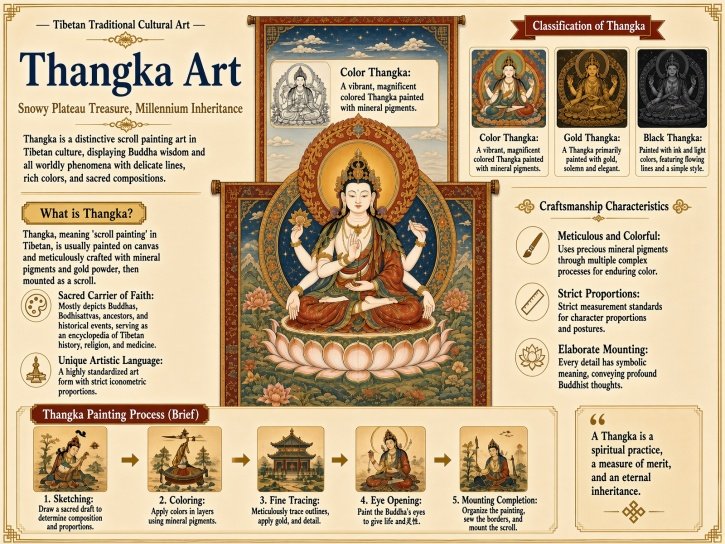
A Thangka is more than just a painting. It is a visual representation of Buddhist deities, mandalas, teachers, and cosmic diagrams. Artists follow strict iconographic rules from texts like the Iconometric Sutra to ensure every proportion, color, and gesture carries spiritual meaning. The word “Thangka” itself means “something that can be rolled up,” reflecting its practical design for nomadic life in the Himalayas.
Brief History of Tibetan Thangka Art
Thangka art emerged in the 7th century during the Tibetan Empire under King Songtsen Gampo, when Buddhism first took root in Tibet. Influenced by Indian, Nepalese, and later Chinese painting traditions, it developed into a distinct Tibetan style. By the 15th century, major schools such as the Menri (Menthang), Khyenri, and Karma Gadri styles had formed. Today, Thangka remains a living tradition, recognized as a national intangible cultural heritage of China.
Main Types of Thangka
Thangkas are classified in several ways:
Painted Thangkas (Tsi-tang): The most common type, created with mineral pigments.
Color Thangka (bright multi-colored backgrounds)
Gold Thangka (golden background)
Red Thangka (vermilion background)
Black Thangka (dark background with gold outlines)
Embroidered and Appliqué Thangkas (Gos-tang): Made with silk embroidery, appliqué, or tapestry techniques.
Popular subjects include the Buddha, Avalokiteshvara, Green Tara, wrathful protectors, mandalas, and the Wheel of Life.
How Traditional Thangka Paintings Are Made
Creating an authentic Thangka is a meticulous process that can take months or even years:
Prepare the cotton or silk canvas with glue and chalk, then polish it smooth.
Sketch the composition using precise geometric grids based on sacred measurements.
Apply layers of natural pigments ground from minerals such as lapis lazuli, cinnabar, and malachite.
Add fine gold detailing.
“Open the eyes” of the central figure in a final sacred step.
Mount the painting in silk brocade and consecrate it.
Only natural materials are traditionally used, which is why genuine Thangka paintings retain their vibrant colors for centuries.
Cultural and Spiritual Significance
In Tibetan Buddhism, Thangka paintings function as meditation supports. Practitioners visualize the deity or mandala depicted to develop compassion, wisdom, and insight. They also serve as educational tools, illustrating complex teachings on medicine, astronomy, and Buddhist philosophy. Because of their portable nature, Thangkas allowed faith and knowledge to travel across the vast Tibetan plateau.
Why Thangka Art Matters Today
Authentic Tibetan Thangka painting continues to be practiced in Tibet, Nepal, Bhutan, and exile communities. Collectors, museums, and spiritual practitioners worldwide value these works for their beauty, craftsmanship, and deep cultural meaning. Whether displayed in a home shrine, temple, or gallery, a Thangka remains a powerful bridge between art and spirituality.Keywords naturally integrated for SEO: Thangka painting, Tibetan Thangka, Thangka art, Tibetan Buddhist art, sacred Tibetan paintings, history of Thangka, types of Thangka, how Thangkas are made, Thangka meaning, traditional Thangka.