

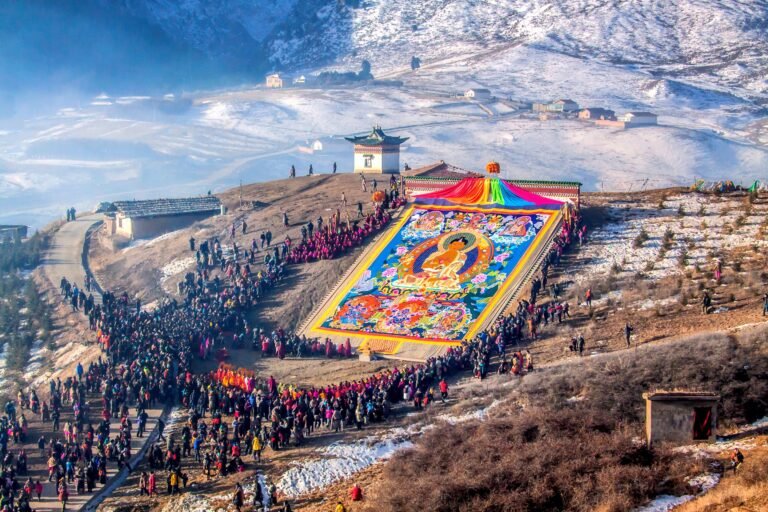
1. Thangka Is More Than a Painting — It Is a Portable Temple
The word “Thangka” comes from the Tibetan term meaning “something that can be rolled up.” Emerging after Buddhism entered Tibet in the 7th century, Thangka developed into a distinctive form of Tibetan Buddhist sacred art. Traditional Thangkas are painted on cotton or silk using natural mineral pigments (such as azurite, malachite, cinnabar, and gold dust) and strictly follow the proportions outlined in classical texts like the Iconometric Scriptures.
Once completed, a genuine Thangka undergoes consecration by a qualified lama or high monk. Sacred mantras corresponding to the deity’s body, speech, and mind are written on the back, inviting the enlightened presence to reside within the image. After consecration, the Thangka is no longer regarded as ordinary art — it becomes a living support for practice, believed to carry the same blessings as the deity it depicts. This principle of “image as deity” forms the foundation of its ability to transmit auspicious and peaceful energies.
2. The Source of Auspicious Energy: The Eight Auspicious Symbols and Deity Blessings
One of the most powerful carriers of auspicious energy in Thangka is the Eight Auspicious Symbols (Ashtamangala):
- Parasol — protection from suffering and obstacles
- Pair of Golden Fish — freedom, fertility, and abundance
- Treasure Vase — inexhaustible wealth and longevity
- Lotus — purity rising above worldly impurities
- Right-turning Conch Shell — the far-reaching sound of the Dharma
- Endless Knot — the interconnectedness of wisdom and compassion
- Victory Banner — triumph over afflictions and negativity
- Dharma Wheel — the continuous turning of the Buddha’s teachings
When these symbols appear together with specific deities, their auspicious power becomes more focused:
- Green Tara Thangka: Associated with swift protection, the removal of fear, and the granting of safety and success.
- White Tara and the Three Long-Life Deities: Symbolize health, longevity, and well-being.
- Wealth deities (such as Yellow Jambhala or related protectors): Traditionally linked to financial stability and household harmony.
- The Four Harmonious Friends: A popular subject that embodies respect, cooperation, and peaceful coexistence.
The painting process itself is infused with positive intention. Traditional artists observe purity practices, maintain ethical discipline, and generate the altruistic aspiration that “whoever sees this Thangka may receive benefit.” The use of luminous mineral pigments and gold further enhances the sense of sacred radiance. Many people report that after hanging a consecrated Thangka, their living or working space feels more protected, smoother, and blessed.
3. The Channel of Peaceful Energy: Visualization, Color, and Spatial Purification
While auspicious energy often relates to external good fortune and protection, peaceful energy points more directly to inner stillness and environmental harmony. Thangka excels in this domain for several reasons:
Visualization Anchor for Meditation In Vajrayana practice, Thangka serves as the primary visual support for deity yoga. Practitioners gaze at the image and gradually internalize the deity’s qualities of compassion, wisdom, and serene presence. Focusing on a harmonious composition and compassionate face has been widely observed to reduce anxiety and stabilize the mind. Quiet deities such as Green Tara, Amitabha, or Shakyamuni Buddha are especially suitable for daily meditation and stress relief.
Color and Composition as Energy Regulators Thangka colors follow precise symbolic systems: white for purity and peace, blue for vast wisdom, green for healing and growth, and gold for enlightened light. The symmetrical, sacred geometry of mandala-style compositions creates visual order that counters the fragmentation of modern life. Many people notice that a room with a Thangka feels clearer, calmer, and less burdened by heavy or restless energy.
Consecration and Proper Placement The consecration ritual purifies any residual negative influences from the creation and handling process and invites protective deities to guard the image. When correctly placed in a clean, respectful location (avoiding bedrooms, bathrooms, or cluttered areas), a Thangka becomes a continuous source of positive energy in the home or meditation space.
4. How Modern People Can Connect with These Energies
You do not need to be a formal Buddhist practitioner to benefit from Thangka:
- Home placement: Choose a subject that matches your intention (Tara for protection and peace, Manjushri for wisdom, Amitabha for inner calm) and hang it in the living room, study, or meditation corner. Keep the area clean and orderly.
- Daily contemplation: Spend a few minutes each day simply looking at the Thangka while breathing calmly or softly reciting a short mantra.
- Meaningful gifts and collections: A Thangka carries far deeper blessings than ordinary décor and makes a powerful gift of auspiciousness and peace.
- Selection criteria: Prioritize hand-painted works that follow traditional proportions and, ideally, have received proper consecration. Natural mineral pigments and authentic craftsmanship better preserve both artistic and energetic value.
In an age of constant distraction, Thangka reminds us that true auspiciousness arises from inner purity and goodwill, and true peace comes from a sustained connection with wisdom and compassion. It is not superstition, but a sophisticated system of visual, ritual, and symbolic technology that helps modern people reclaim inner order and blessing.
Conclusion: Let Auspiciousness and Peace Become the Everyday Foundation of Your Life
Thangka can link auspicious and peaceful energies because it unites sacred symbolism, rigorous ritual, the pure intention of the artist, and the faith of the viewer. From the ancient blessings of the Eight Auspicious Symbols to the contemporary mental healing offered by contemplative gazing, Thangka continues to serve across time and culture.
If you are looking for a Thangka that can elevate the energy of your home, support meditation, or serve as a meaningful collection piece, we invite you to explore our independent online store. We carefully select both traditional and high-quality contemporary works, emphasizing authentic craftsmanship and consecration, and offer professional guidance to help you find the piece that best matches your needs.
May every Thangka bring genuine auspiciousness and lasting peace into your life.