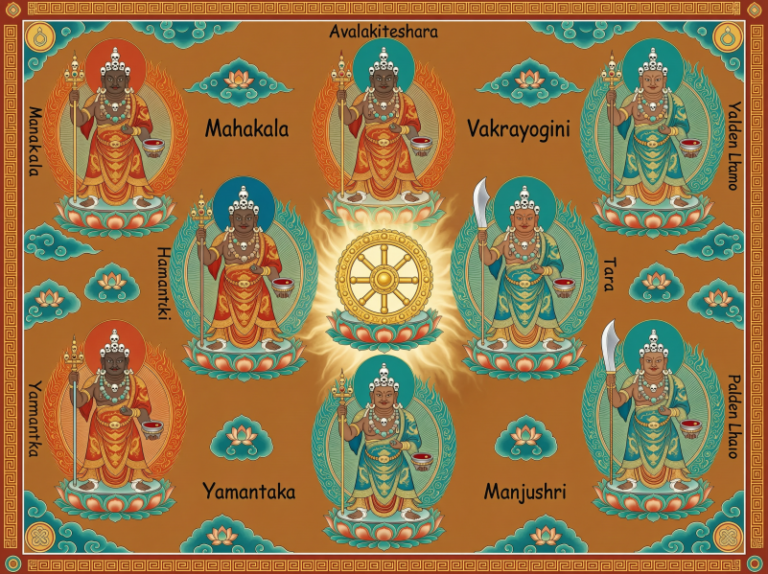
The Eight Guardian Deities, also known as Zodiac Patron Saints, are an important part of Tibetan Esoteric Buddhism. Rooted in the philosophy of five cosmic elements, each deity is closely connected with one or two Chinese zodiac signs. They are widely cherished for bringing blessings, wisdom and protection. Below is an introduction to their cultural origins, symbolic meanings and essential taboos.
I. Cultural Origins
The Eight Guardian Deities evolved from Tibetan Esoteric Buddhism. These eight Bodhisattvas manifested to protect Dharma and liberate all living beings. Tibetan Buddhism holds that people are linked with specific Buddhas and Bodhisattvas by karmic affinity. Matched with the traditional Chinese zodiac culture, each deity serves as the exclusive patron saint for corresponding zodiac signs, helping dispel karmic obstacles and grant peace and fortune.
This belief blends the indigenous guardian worship of Tibetan Bon religion and Chinese zodiac culture. Having been passed down for thousands of years, it has become an indispensable part of Tibetan culture. Thangkas, pendants and statues have also turned into popular carriers of faith and traditional art.
II. Zodiac Correspondences & Symbolic Meanings
1. Thousand-Armed Avalokiteshvara – Patron for the Rat
One of the most compassionate Bodhisattvas. Symbolizes boundless mercy and universal salvation. It blesses Rat natives with disaster relief, good luck, enhanced wisdom and popularity, and helps overcome over-sensitivity.
2. Akashagarbha Bodhisattva – Patron for the Ox & Tiger
Represents infinite blessings, wisdom and inner strength. It brings prosperous wealth and steady career development. It empowers Ox and Tiger people to stay resolute and courageous, improve judgment and defuse conflicts.
3. Manjushri Bodhisattva – Patron for the Rabbit
The Bodhisattva of supreme wisdom and enlightenment. Holding a wisdom sword and sacred scriptures, it cuts through ignorance and confusion. It aids academic progress and career breakthroughs, helps people think clearly and make decisive choices.
4. Samantabhadra Bodhisattva – Patron for the Dragon & Snake
Stands for great vows and virtuous deeds. Riding a six-tusked white elephant, it embodies perseverance and dedication. It blesses Dragon and Snake natives with stable growth, noble support and accumulated blessings, and restrains impetuosity.
5. Mahasthamaprapta Bodhisattva – Patron for the Horse
One of the Three Saints of the West. Symbolizes radiant light and firm will. It guides Horse people to stay focused and forge ahead, ushers in bright prospects, and relieves restlessness and anxiety.
6. Vairocana Buddha – Patron for the Goat & Monkey
The supreme Buddha in Esoteric Buddhism, representing universal light and ultimate truth. It brings peace, good fortune and protection against villains. It encourages Goat and Monkey people to be broad-minded, confident and optimistic.
7. Acala Buddha – Patron for the Rooster
The chief of the Eight Wisdom Kings. Symbolizes fearlessness and the power to remove obstacles. It protects Rooster natives from gossip and misfortune, strengthens willpower and courage to overcome hardships.
8. Amitabha Buddha – Patron for the Dog & Pig
One of the Three Saints of the West. Known as the Buddha of Infinite Light and Compassion. It grants health, longevity and family harmony, calms negative emotions and fills life with peace and blessings.
III. Taboos for Wearing & Enshrinement
A. Taboos for Wearing Pendants & Thangka Ornaments
- Consecration required Only properly consecrated pieces carry spiritual power. Please choose artworks blessed by certified masters from formal temples or Regong Thangka academies. Ordinary crafts have no sacred meaning.
- Keep away from unclean places Take off the ornament before bathing, using the restroom or intimate moments, out of sincere respect.
- Do not wear while sleeping Remove it before going to bed. Place it on a clean, elevated surface such as a bedside table. Never put it under the pillow or leave it randomly.
- Maintain cleanliness Clean stains with pure water only; do not use chemical detergents. Replace worn cords in a timely manner.
- Avoid random touching or gifting Store the ornament in a dedicated clean bag when not in use. Do not let others touch it casually. Do not give it away at will. If you pass it to others, reconsecration is required.
- Keep good intentions Wearers should be kind and compassionate. Evil thoughts and bad deeds will weaken spiritual blessings.
- Proper disposal for damaged items If the pendant breaks or cracks, it is believed to have absorbed misfortune for you. Do not throw it away directly. Wrap it with red cloth, bury it in clean soil or send it to a temple for proper arrangement.
B. Taboos for Enshrining Thangkas & Statues
- Select proper placement Place thangkas and statues in bright, clean living rooms or studies. Never put them in kitchens, restrooms or bedrooms. Keep them higher than your waist; do not set them on the ground.
- Stay pure and tidy Dust regularly. Offer fresh flowers, fruits and pure water only. Never place meat, alcohol or tobacco as offerings. Replace offerings frequently.
- Neat arrangement Do not mix them with other decorations randomly. Avoid placing them facing the main door or under overhead beams.
- Be respectful Dress neatly when paying homage. Do not quarrel, use vulgar language or act disrespectfully in front of sacred images.
IV. Cultural Essence
The Eight Guardian Deities are far more than symbols of blessing. They guide people to pursue kindness, self-cultivation and virtue. True protection comes from a pure heart and good conduct. Respecting this culture means cultivating inner peace and positive energy in daily life.